Free Online German Dialect Translation Tool
Convert between Standard German, Bavarian, Swiss German, and Low German dialects with our translation tool for regional vocabulary and expressions.
How Our Free Online Translator Works
Our free German dialect translation tool processes your text using advanced language models to convert between Standard German (Hochdeutsch) and major regional dialects including Bavarian, Swiss German, and Low German.
While spoken German dialects have unique pronunciation features, our tool focuses on written dialect differences, helping German speakers communicate effectively across regional variations.
💡 Pro Tip: For best results, input complete sentences rather than single words to help the tool understand context and capture authentic regional expressions.
Understanding German Regional Text Differences
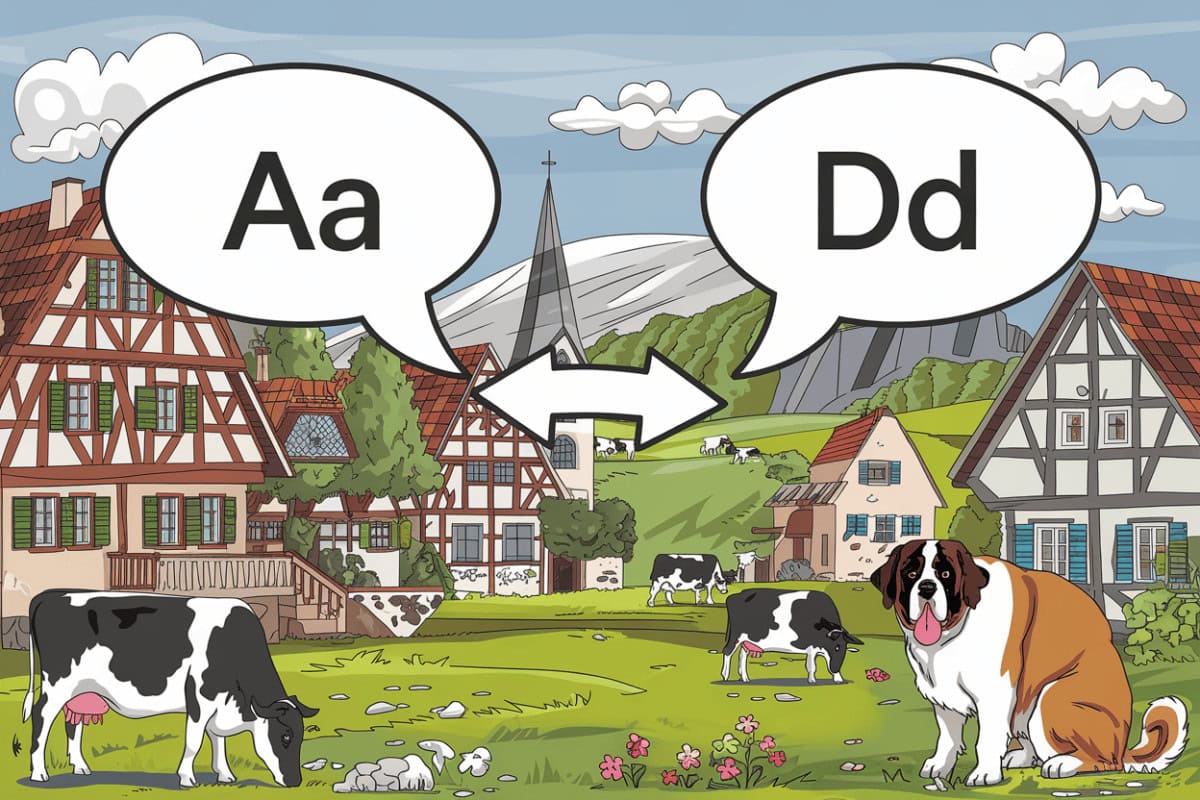
German dialects exhibit significant written and spoken variations that developed over centuries in different regions. Each dialect has its own vocabulary, grammar patterns, and spelling conventions that reflect local language traditions. This online tool helps users convert their text between these distinct regional variants.
Key dialect differences our tool recognizes:
- Regional vocabulary and idioms (e.g., “Brötchen” vs. “Semmel” vs. “Brötli”)
- Distinct grammatical structures common to each dialect
- Alternative spellings reflecting regional pronunciations
- Characteristic word forms and endings specific to each dialect
⚠️ Note: While our tool translates text between dialects, it does not provide audio guidance for the diverse pronunciation patterns of German regional speech.
Regions and Characteristics of German Dialects
Bavarian (Bairisch)
Spoken in: Bavaria, parts of Austria Key features: Strong consonants, unique articles (e.g., “der” → “da”), frequent diminutives with “-erl” ending (e.g., “Mädchen” → “Maderl”). Common phrases: “Grüß Gott” (hello), “Servus” (hi/bye), “Pfiat di” (goodbye).
Swiss German (Schweizerdeutsch)
Spoken in: German-speaking Switzerland Key features: No ß letter, “-li” diminutives (e.g., “Haus” → “Hüsli”), “ch” pronunciation unique to region. Distinctive vocabulary: “Velo” (bicycle), “Znüni” (morning snack), “Grüezi” (hello).
Low German (Plattdeutsch)
Spoken in: Northern Germany Key features: Retains old Germanic features, “maken” instead of “machen” pattern, distinct pronunciation of “sp/st”. Notable phrases: “Moin” (hello), “dat” instead of “das”, “ik” instead of “ich”.
Comparison Example:
- Standard German: “Ich möchte ein kleines Haus kaufen.”
- Bavarian: “I mecht a kloans Häuserl kaffa.”
- Swiss German: “Ich wott es chlises Hüsli chaufe.”
- Low German: “Ik will en lütt Huus köpen.”
Regional Usage Tips:
- Bavarian: Strong in informal settings, widely used in Munich and rural Bavaria
- Swiss German: Primary spoken form in Switzerland, even in professional contexts
- Low German: More common in rural areas, experiencing revival among younger speakers
