

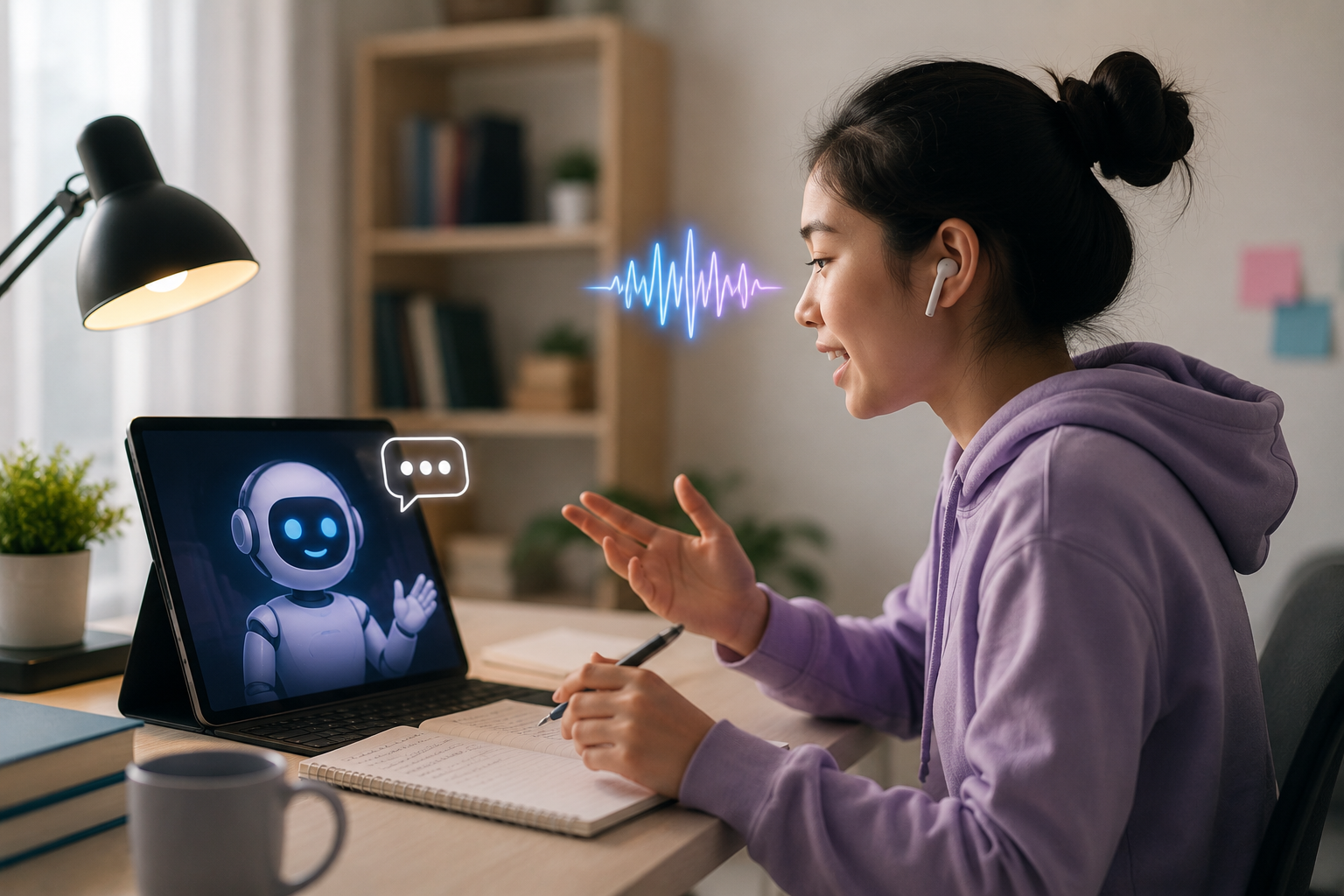
We have all been there. After spending several months learning the language through our mobile phones, remembering vocabulary, and getting high scores on grammar quizzes, we find ourselves unable to respond to a straightforward question from a native speaker.
We feel our heartbeat racing, sweat forming on our palms, and forget everything about the words.
This panic feeling, which takes place when dealing with another language, is known as Foreign Language Anxiety (FLA).
This psychological barrier causes even the most motivated individuals to freeze up. This happens due to the fear of looking ridiculous, making grammatical mistakes, or being socially judged.
Thankfully, the way we tackle this fear is changing rapidly. The traditional, high-pressure classroom environment is evolving, thanks to the creative implementation of conversational AI in education.
By utilizing highly interactive, responsive voice systems, developers are building safe digital environments where learners can stumble, mispronounce words, and build genuine confidence at their own pace without ever feeling embarrassed.
Why Speaking a New Language Triggers Severe Anxiety?
The processes of reading and writing allow for the benefit of time. You have the opportunity to reflect upon, edit, and then share your thoughts with others. Speech, on the other hand, occurs in real-time and requires one’s mind to coordinate:
- Choosing the correct vocabulary words.
- Applying complex grammatical structures.
- Perfecting mouth shapes for clear pronunciation.
- Listening to and decoding what the other person is saying.
When you add the crushing weight of public embarrassment to this mix, your brain triggers its classic fight-or-flight response.
The emotional filter shoots up, actively blocking your working memory. You do not freeze because you are unprepared; you freeze because your brain treats social judgment like a physical threat.
The Solution: Meet Your Judgment-Free Practice Partners
It is here that the power of voice AI tutors makes all the difference. Think about practicing with someone who is there for you in the middle of the night, is infinitely patient, and physically unable to judge you.
When talking to the digital tutor, the whole element of social threat disappears because the AI does not mind if you spend two minutes forming one sentence.
It will not be sighing and rolling its eyes at you and thinking any worse of you if you use your tenses incorrectly.
Here are some of the new platforms that are driving the digital revolution now:
- Duolingo Max: Uses very sophisticated conversation techniques to help users role-play daily situations with the help of AI characters.
- Elsa Speak: Emphasizes speech recognition, offering real-time audio feedback for corrections in pronunciation.
- Babbel Live AI features: Offers realistic conversations to mimic human speed of speech.
Along with these, one name to note is Murf AI, which is the foundational infrastructure technology that makes those kinds of apps possible.
It provides ultra-low-latency, lifelike conversational voice APIs and engines that allow developers to build these highly responsive, multilingual learning assistants in the first place.
Clear Benefits of Voice AI Tutors
So, how do these tools actually help you overcome your fear of conversation? Through specific practical aspects, they close the huge distance between theoretical book-based learning and life situations.
- Low-Stakes Situational Roleplay
No need to practice abstract sentences. Practice ordering a croissant in a café in Paris, checking into a boutique hotel in Madrid, or taking part in an interview while sitting in the comfort of your own home.
- Micro-Feedback Without Interruption
A human conversation partner may either interrupt you when you make a mistake to correct it or completely overlook the issue just because he or she does not want to hurt your feelings. But an AI conversation tutor perfectly balances between these two extremes, providing unobtrusive visual feedback about your accent and grammar right after you have finished speaking.
- Infinite, On-Demand Scalability
The conventional human tutors are costly and follow strict timetables. The voice AI tutors are programmed right into your apps to allow for limitless speaking loops any time you get five free minutes.
Transforming the Modern Educational Landscape
However, this does not suggest that humans are irrelevant as educators. On the contrary, this trend is fundamentally transforming classroom dynamics. The combination of such vocal tools makes for a perfect blend of the learning process.
Students use the AI tools at home to handle the repetitive, high-anxiety drilling of basic speech patterns. By the time they step into a live classroom or an online group discussion, their foundational muscle memory is already established.
Teachers can then skip the awkward silences and dive straight into high-level cultural context, creative storytelling, and rich interpersonal debates.
Conclusion: Regain Your Confidence
Language speaking anxiety is not an indication of weakness but an inherent obstacle on your way to becoming fluent in another language. However, you cannot swim if you do not enter the pool.
The lack of judgment of the virtual assistants will provide you with your own private pool where you will be able to make mistakes and become stronger.
Thus, the absence of instant social repercussions will enable you to stop hearing your inner voice and become confident in your speech.
